.png?imageMogr2/format/webp)
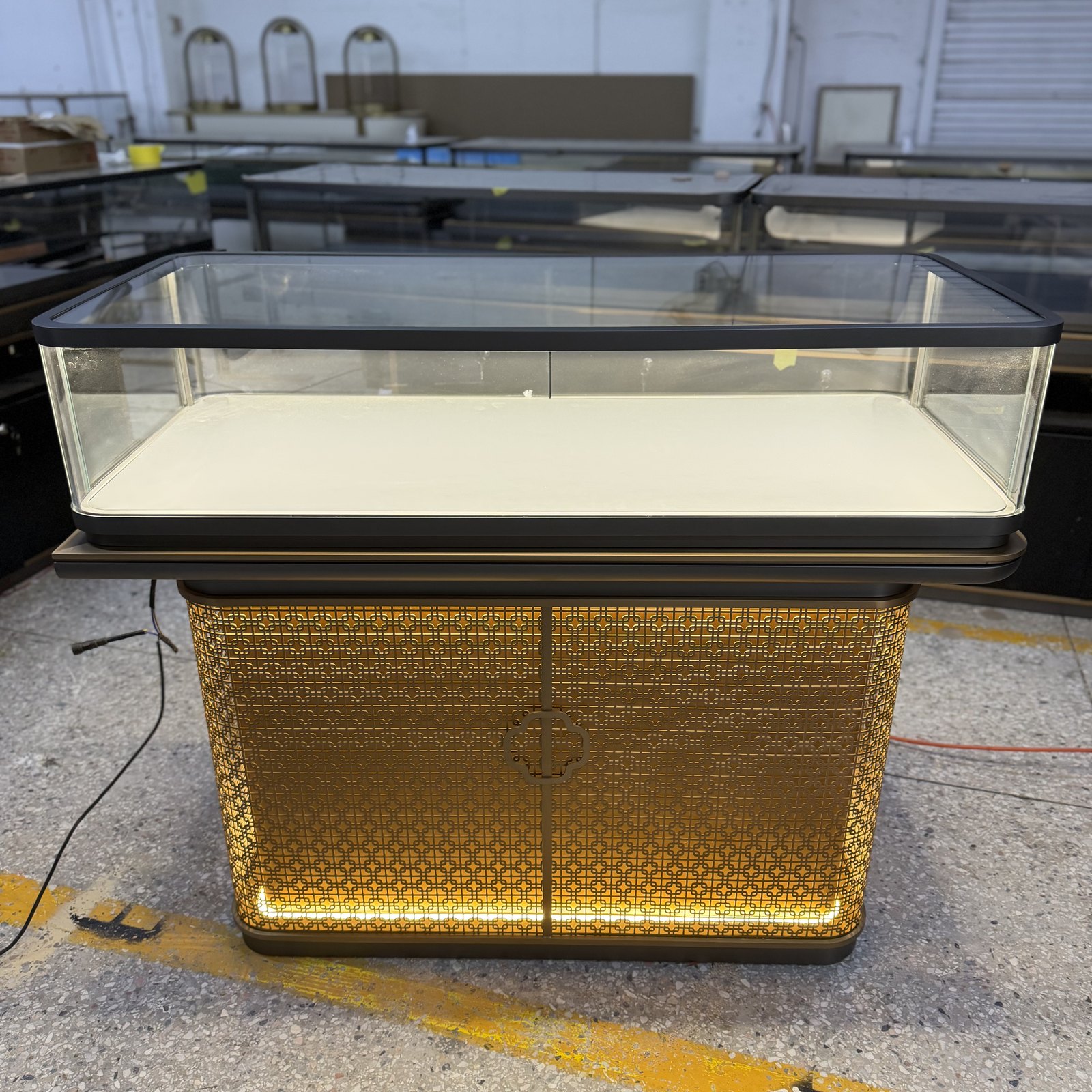
A low iron glass jewelry showcase is worth considering when neutral-looking glass and clearly visible edges are important to the store design. Standard clear glass may still meet the needs of a project where an approved sample delivers an acceptable appearance. The choice should be made alongside panel dimensions, processing requirements, lighting, hardware and budget. Compare representative samples under the proposed display lighting before approving the specification.
1. What Is the Difference Between Low Iron and Standard Clear Glass?
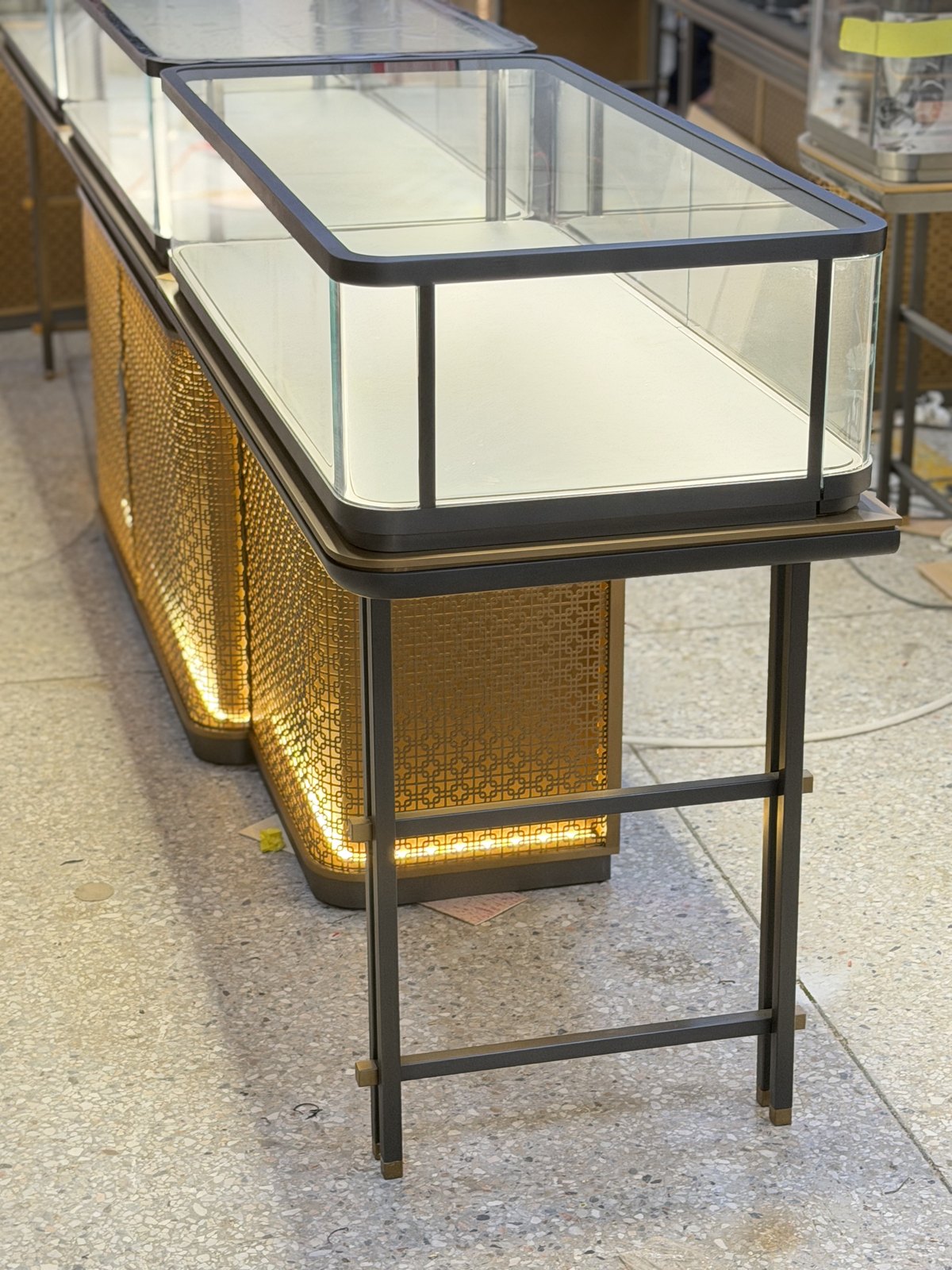
Standard clear glass is transparent, but it can have a greenish tint. Low iron glass is made with raw materials containing less iron, producing a more neutral appearance. In a jewelry showcase, that difference can matter when customers look through the glass at the merchandise or see exposed panel edges.
The term “ultra-clear” alone is not a complete purchasing specification. Ask the manufacturer to identify the proposed glass product, its thickness and its processing. Evaluate a physical sample rather than relying only on a quotation description or a photograph.
2. Compare Appearance, Processing and Project Requirements Separately
These are separate specification decisions. Low iron describes the base glass; tempering and lamination describe processing or construction. Anti-reflective treatments address another aspect of viewing performance. Confirm each requirement individually instead of treating “premium glass” as a complete technical description.
| Decision point | Standard clear glass | Low iron glass |
|---|---|---|
| Color appearance | Can show a greenish tint | More neutral-looking base glass |
| Exposed edges | Assess the visible tint on the proposed sample | Assess the edge appearance on the proposed sample |
| Processing | Specify tempering, lamination or coatings as required | Specify processing separately from the low iron designation |
| Reflections | Review under the planned lighting | Do not assume low iron glass is anti-reflective |
| Budget | Obtain a quotation for the complete specification | Compare the upgrade using the same panel sizes and processing |
3. Where Should You Prioritize Low Iron Glass?
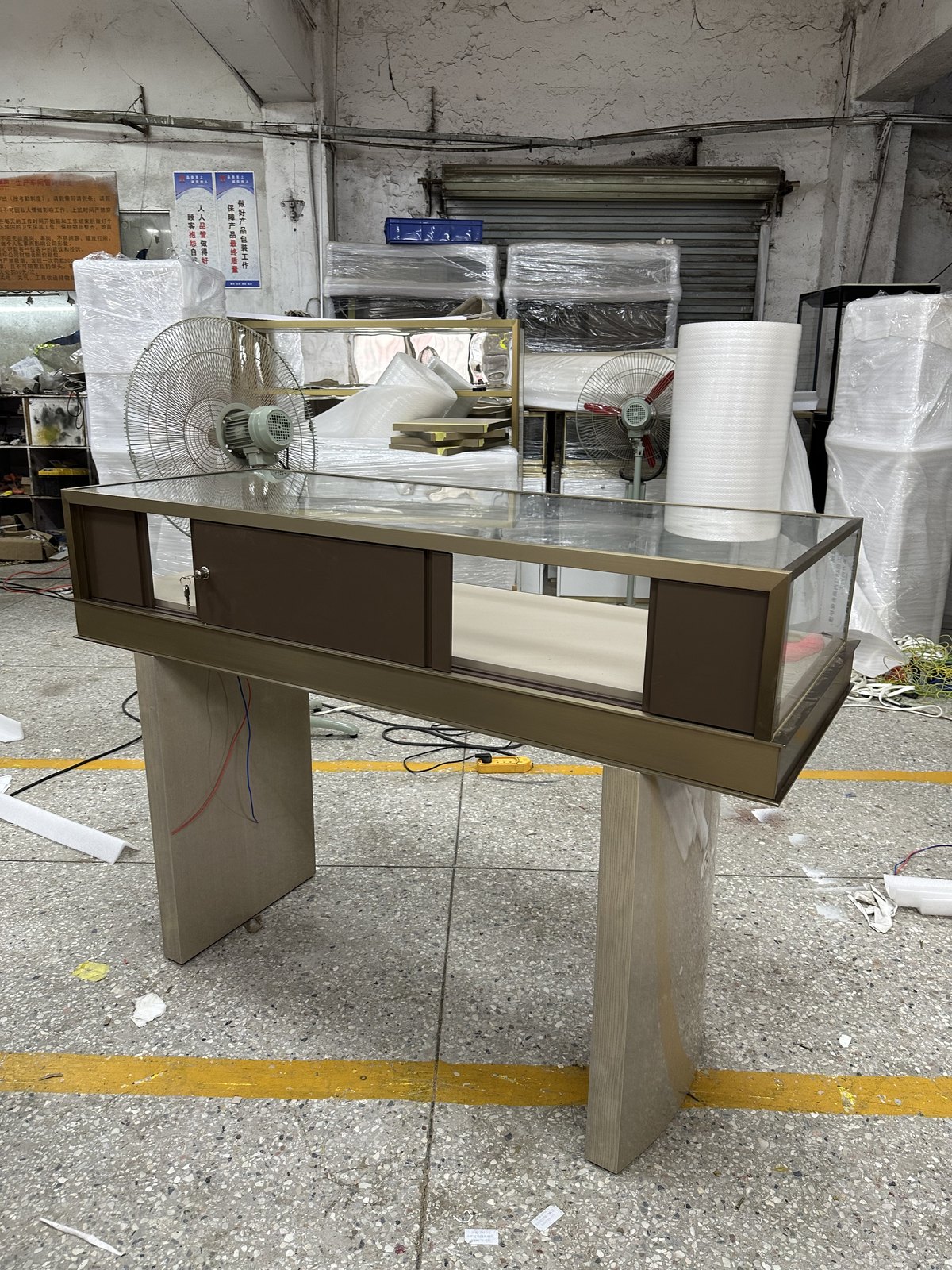
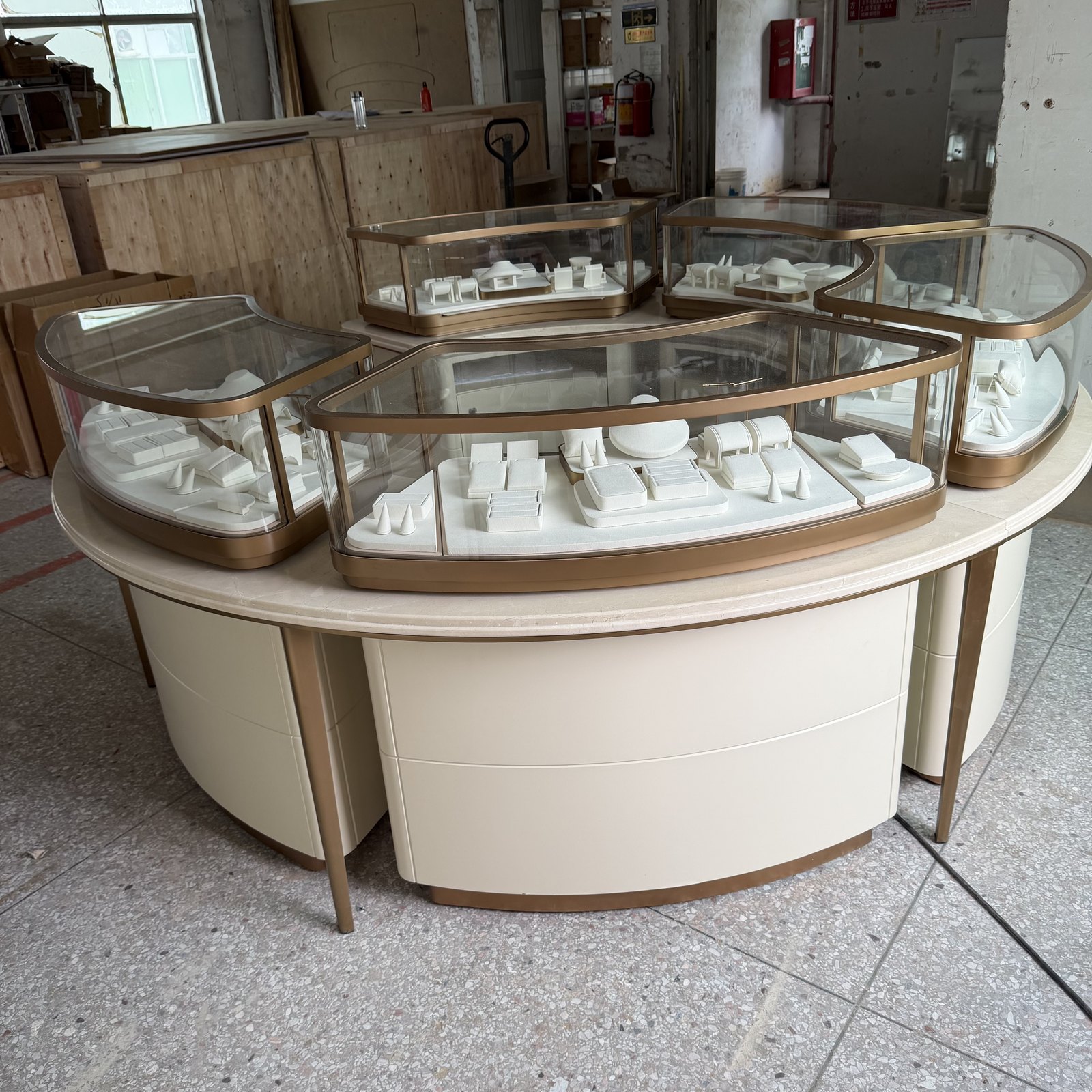
Start with the parts of the showcase customers actually look through. Counter fronts, glass tops and pedestal showcase enclosures are useful places to compare samples, particularly when the design exposes several glass edges. Place the intended jewelry displays behind both samples and judge whether the difference supports the store’s presentation goals.
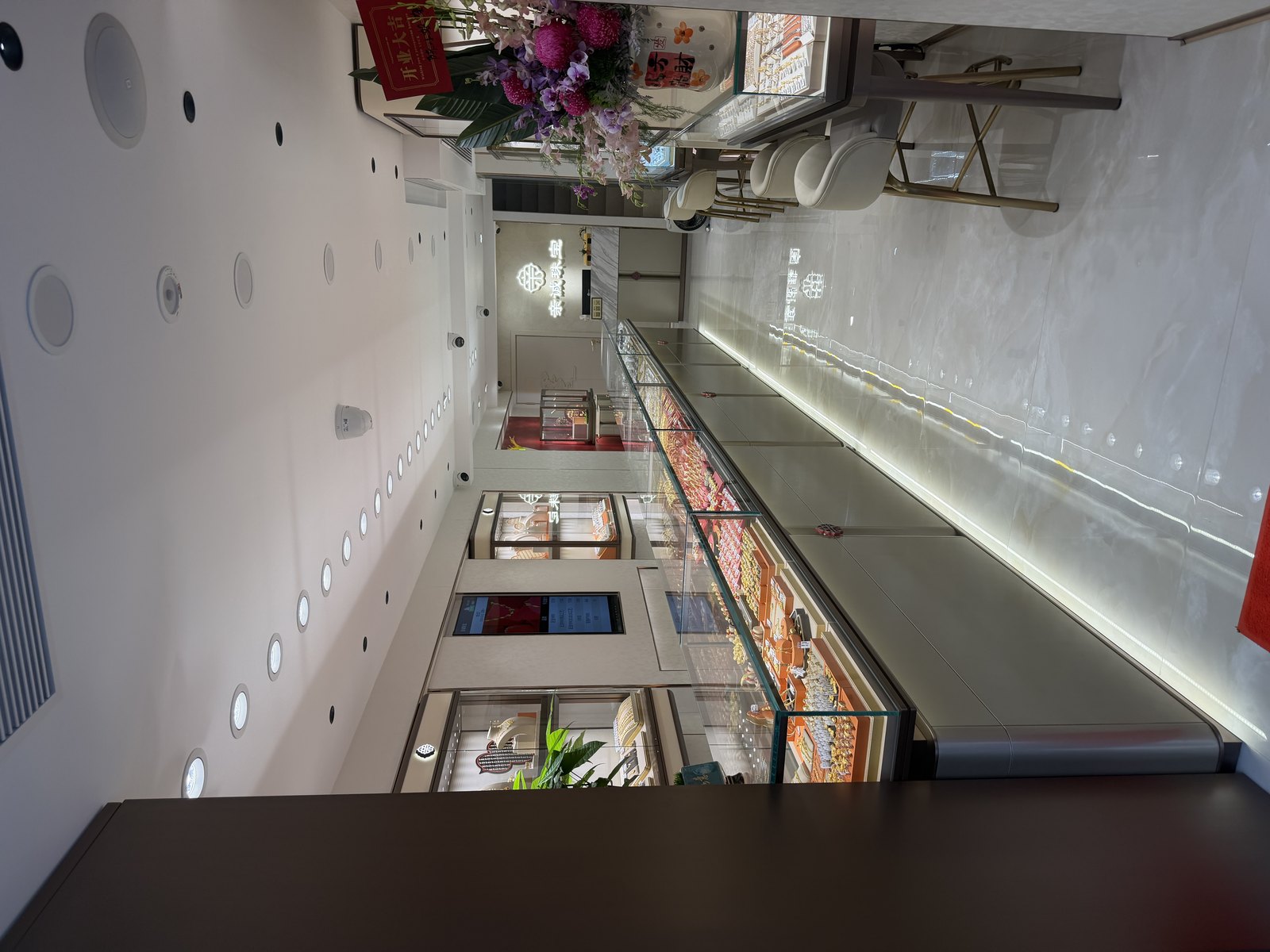
For projects with several cabinet types, record the approved glass specification for each type. If different materials are proposed across adjacent showcases, review them together. A choice that looks acceptable in isolation may produce an unwanted visual difference when the cabinets are installed side by side.
4. Why Lighting and Reflections Still Matter
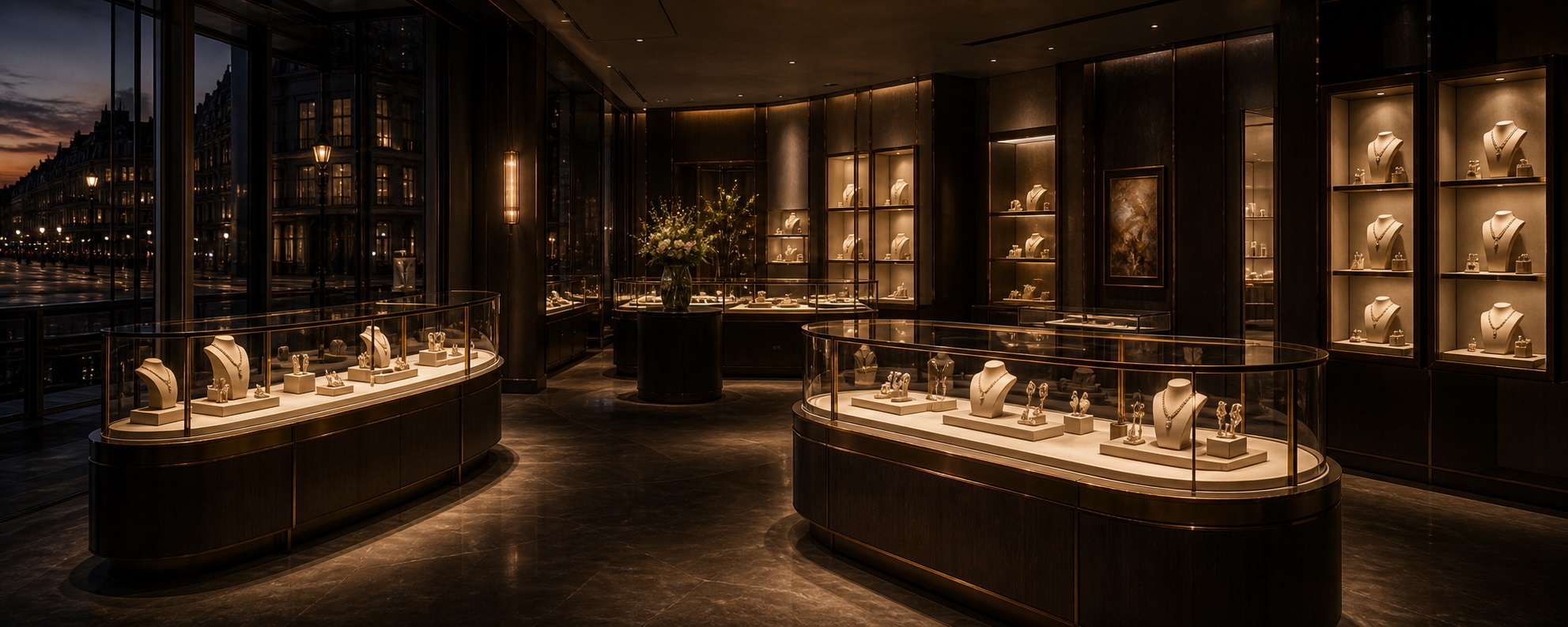
A clearer base glass does not solve every visibility problem. Ceiling lights, storefront glazing and the position of showcase spotlights can affect what customers see reflected on the glass. Low iron and anti-reflective glass should therefore be discussed as distinct options.
During sample review, inspect the display from the front, from a standing customer’s position and from any seated consultation position used in the store. Test the intended light placement and display backgrounds. If reflections remain distracting, review the lighting arrangement and ask whether a suitable anti-reflective option should be evaluated.
5. Craftsmanship Details to Review Before Production
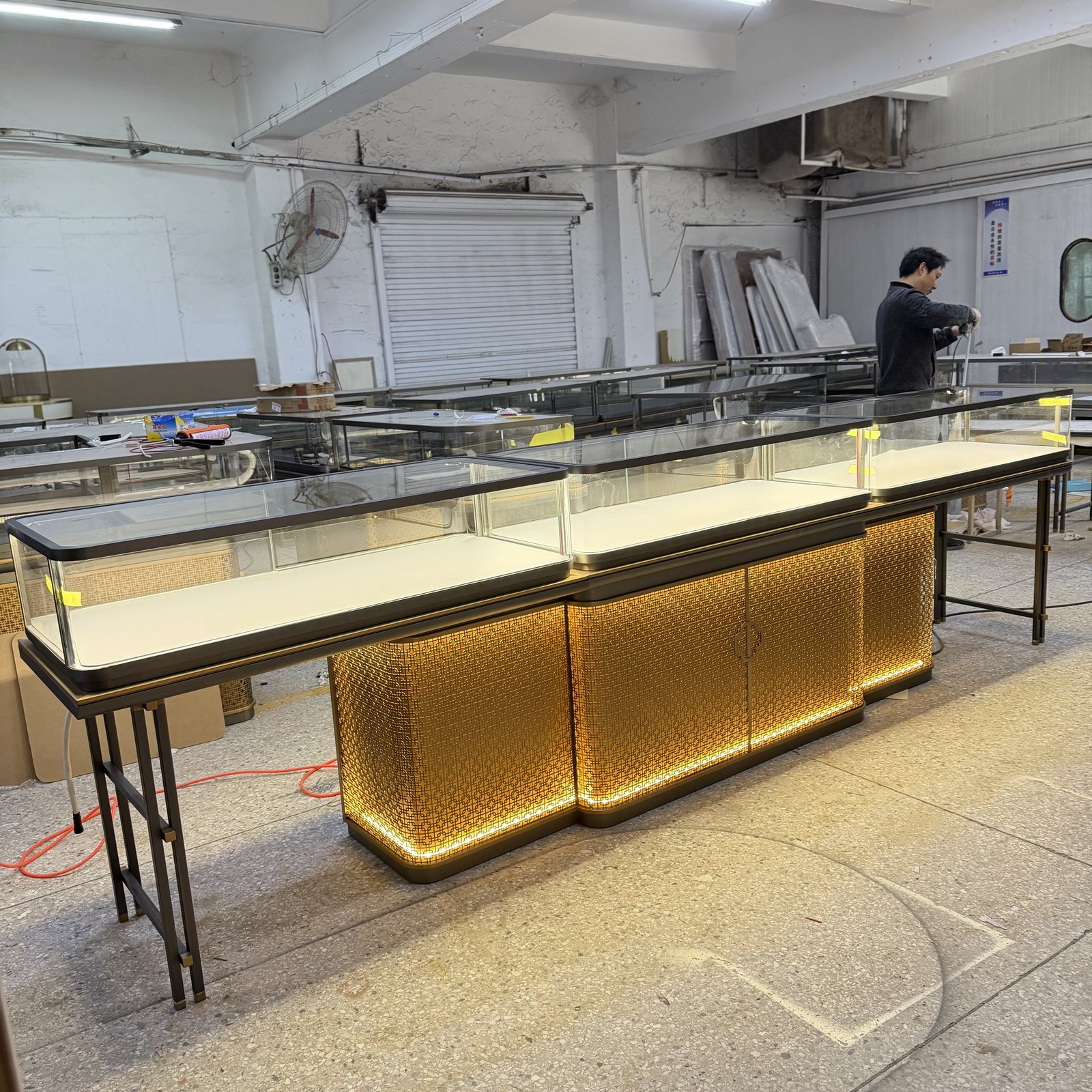
The finished cabinet should be reviewed as an assembly, not just as a glass sample. Inspect exposed edges, corner alignment, visible joints and the relationship between the glass and the metal frame. Ask the manufacturer to define acceptance criteria on drawings or an approved sample, rather than relying on the phrase “fine workmanship.”
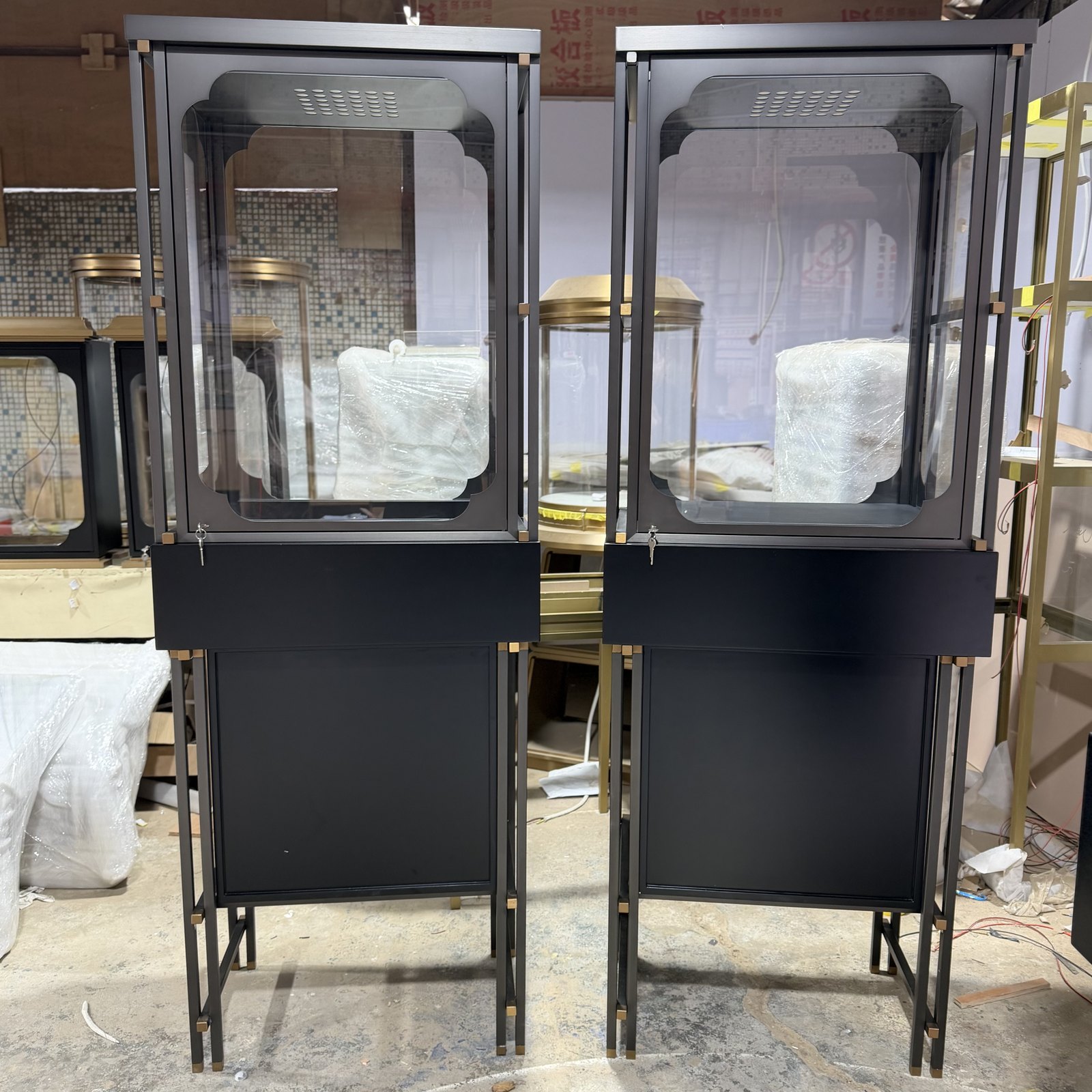
Also review moving glass panels with their proposed hardware. Door dimensions and the finished panel construction should be coordinated with hinges, slides, locks and supporting components. A material substitution should trigger a review of the affected dimensions and hardware before production continues.
6. A Sample Approval Checklist for Custom Jewelry Showcases
Before approving production, document the following:
- The specified base glass product and proposed supplier.
- Panel dimensions, thickness and the required processing or layered construction.
- Edge finish, corner details, joints and visible frame interfaces.
- Any coating, its intended location and the supplier’s handling instructions.
- Sample appearance under the proposed lighting and against the intended display background.
- Door hardware compatibility and access for routine cleaning.
- Approved sample reference, drawing revision and the process for agreeing substitutions.
A small sample can help confirm color and edge finish. Where scale, reflections or moving parts are difficult to assess, agree on a representative cabinet section or mock-up. Record what has been approved and what still requires confirmation.
7. Maintenance and the Final Material Decision
Request cleaning instructions for the actual supplied glass and any coatings. Confirm the permitted cleaning products and methods, especially for coated surfaces, joints and surrounding finishes. Consider how staff will reach both sides of the glass without straining doors or exposing nearby electrical components to cleaning liquid.
The right low iron glass jewelry showcase specification connects the intended appearance with practical construction details. Start with the viewing priorities, compare samples and approve the glass together with the lighting, frame and hardware. To discuss a custom showcase with Shangyuan, share your cabinet drawings, preferred finishes and display requirements so the proposed material specification can be reviewed for your project.
References
- Guardian Glass — Low-iron glass
- Pilkington — Museum and Display Cases
- Guardian Glass — Float glass
- Guardian Glass — Laminated glass