.png?imageMogr2/format/webp)
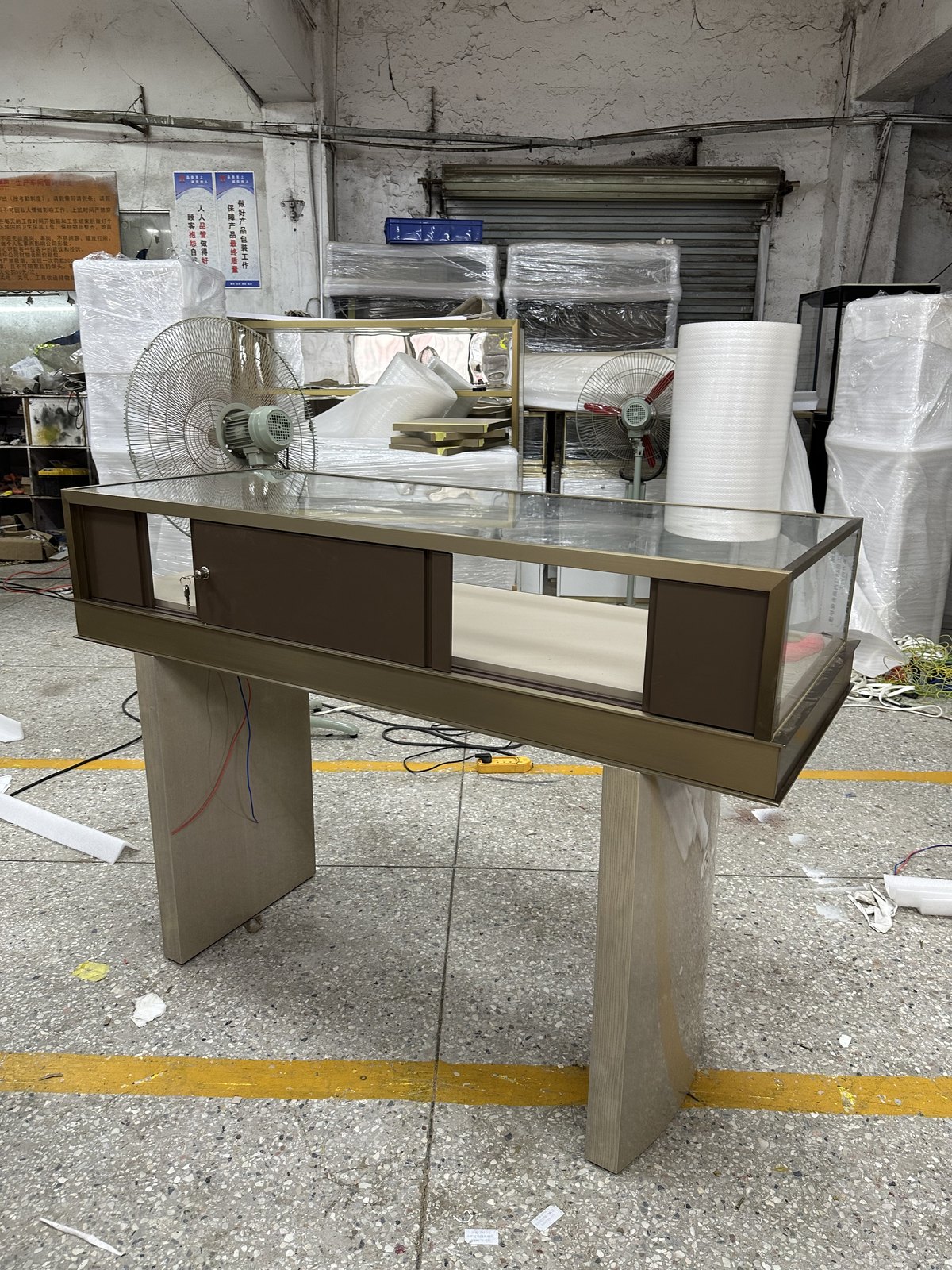
The right jewelry showcase opening options depend on where staff stand, the available operating space and the size of the items being handled. A hinged door needs a clear swing path; a sliding door needs its usable opening checked; and a pull-out display needs room for its travel and an appropriately supported moving assembly. Review these details on the actual cabinet drawing rather than selecting an opening method from a closed-front photograph alone.
1. Start with Staff Access and the Display Layout
Mark the staff side and customer side on the layout before discussing door hardware. A counter served from behind, a pedestal showcase beside a consultation seat and a wall cabinet can require different access arrangements. Check where staff will stand while holding a tray and whether another employee needs to pass at the same time.
Also distinguish access to the display compartment from access to lower storage. A cabinet may use one mechanism for retrieving displayed jewelry and another for supplies below. Draw and label both so that a storage drawer is not mistaken for a pull-out display system.
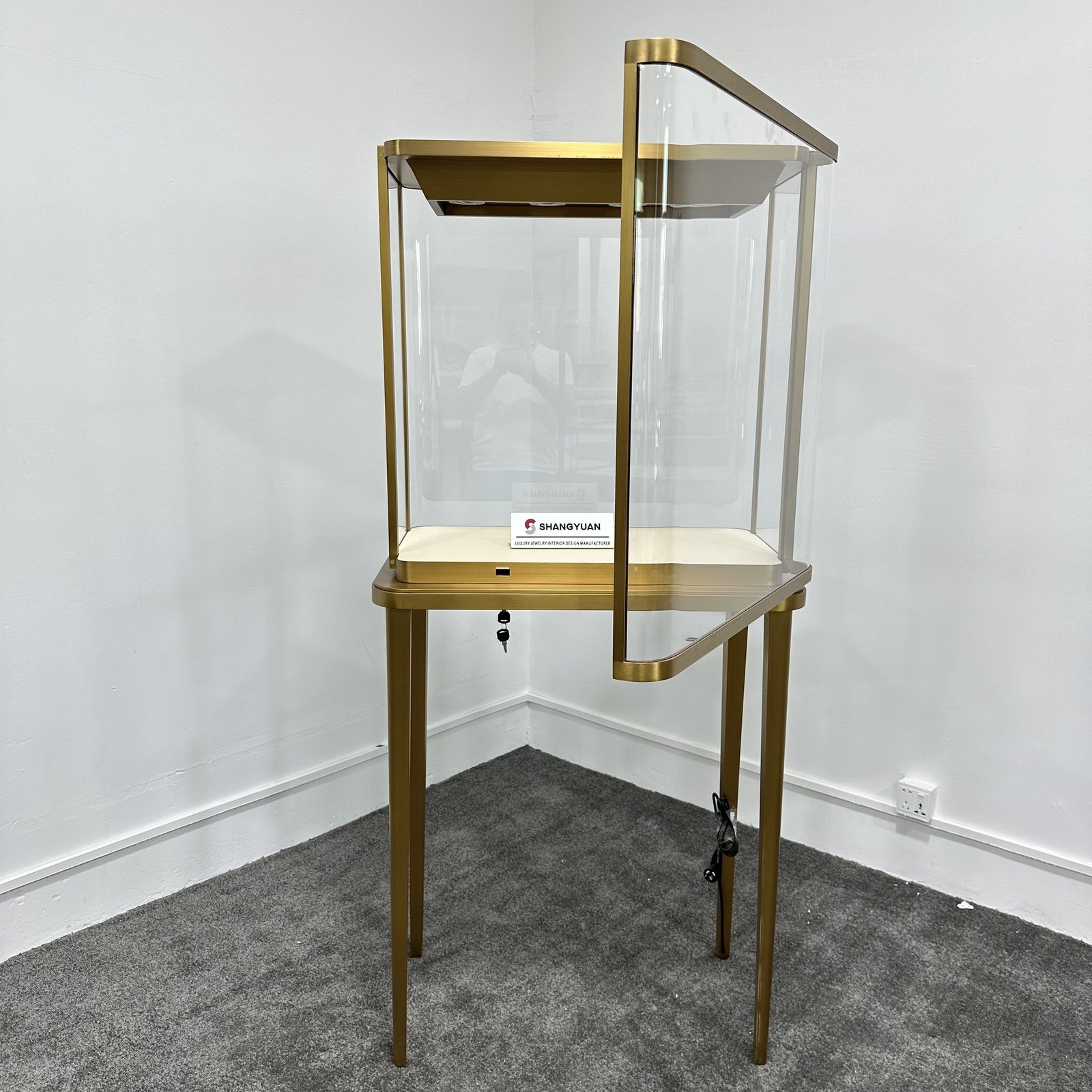
2. Hinged Doors Need a Clear Swing Path
A hinged door pivots around its hinges. It is a candidate where the door can open into a clear staff area without striking a nearby cabinet, chair or wall. Check the intended opening direction and whether the open door interrupts the position staff need for retrieving merchandise.
The access width, opening angle and permitted panel size depend on the selected hardware and cabinet construction. Ask for these to be shown on the drawing. A visually small hinge is not enough information to judge suitability; the panel, fixings and supporting frame must be considered together.
3. Sliding Doors Need a Usable Opening Check
Sliding panels move along tracks instead of swinging into the operating area. They are worth evaluating where a door swing would conflict with nearby furniture or staff circulation. However, the panel arrangement determines how much of the compartment is accessible at one time. Do not assume the full visible width becomes a clear opening.
Review the largest display tray or necklace bust that staff need to remove. Confirm it can pass through the actual opening and that the track arrangement allows access for cleaning. For overlapping panels, check both the overlap visible from the customer side and the closing position of each panel.
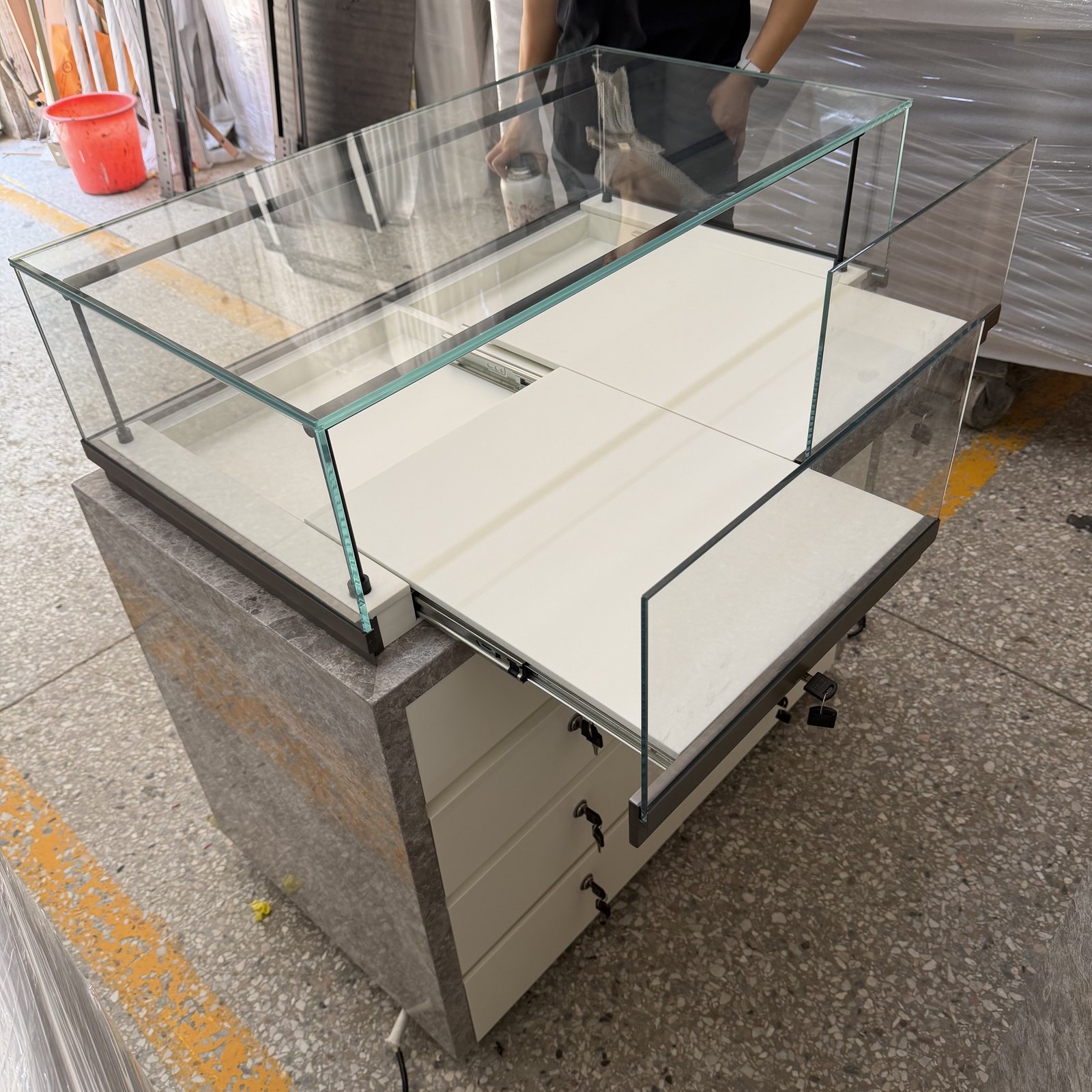
4. Pull-Out Displays Need Travel Space and Support
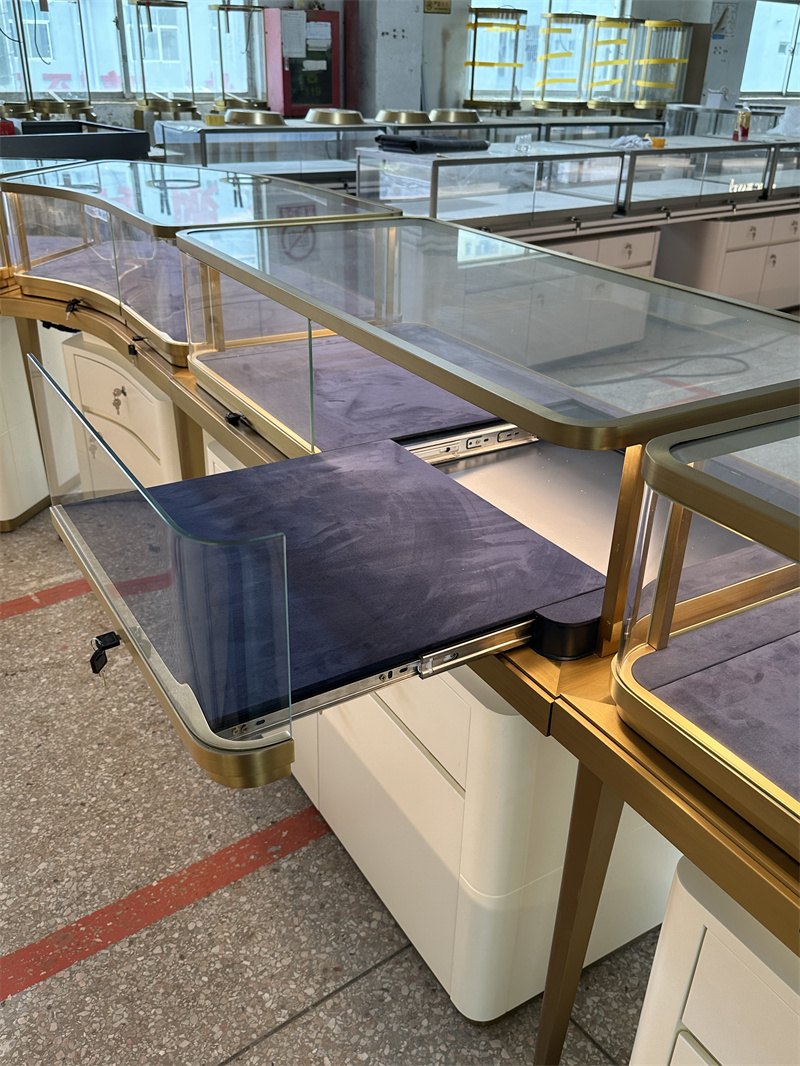
A pull-out display moves a tray or display assembly toward the staff member. It can be considered when bringing the merchandise closer is useful, but the surrounding layout must accommodate the moving section. Confirm what actually moves: an internal tray, a framed display section or another defined assembly.
Review the combined weight of the moving structure and its intended contents with the manufacturer. Ask how the assembly is supported, how far it extends, what limits its travel and whether wiring crosses a moving interface. Use a representative sample or demonstration when the mechanism cannot be understood clearly from drawings alone.
5. Compare the Options on the Same Cabinet Requirements
| Opening method | Space to review | Access to confirm |
|---|---|---|
| Hinged door | Door swing and staff standing area | Clear opening and reach with the door open |
| Sliding door | Track layout and panel movement | Usable opening with the proposed panel arrangement |
| Pull-out display | Extension travel and staff standing area | Tray or assembly access at the agreed extension |
No opening method is automatically the most secure or the easiest to use in every store. Review the proposed lock and its engagement with the actual door or moving assembly. Confirm staff can tell when the cabinet is closed and secured, and inspect the access arrangement with the intended merchandise in place.
6. Confirm the Opening Details Before Production
Before releasing the cabinet for production, confirm the staff access side, direction of movement, clear opening and required operating space. Record the proposed hardware and lock, the display assembly involved and any agreed maintenance access. Identify the drawing revision that contains these decisions.
Where appearance and access requirements compete, review a sample with the cabinet both closed and open. Check visibility from the customer side, removal of the intended trays and closure after use. The aim is to agree on a workable cabinet configuration before those details are fixed in production.
To discuss jewelry showcase opening options with Shangyuan Showcase, share your cabinet dimensions, layout and intended display contents. Our team can review the proposed access arrangement as part of your custom showcase discussion.