.png?imageMogr2/format/webp)
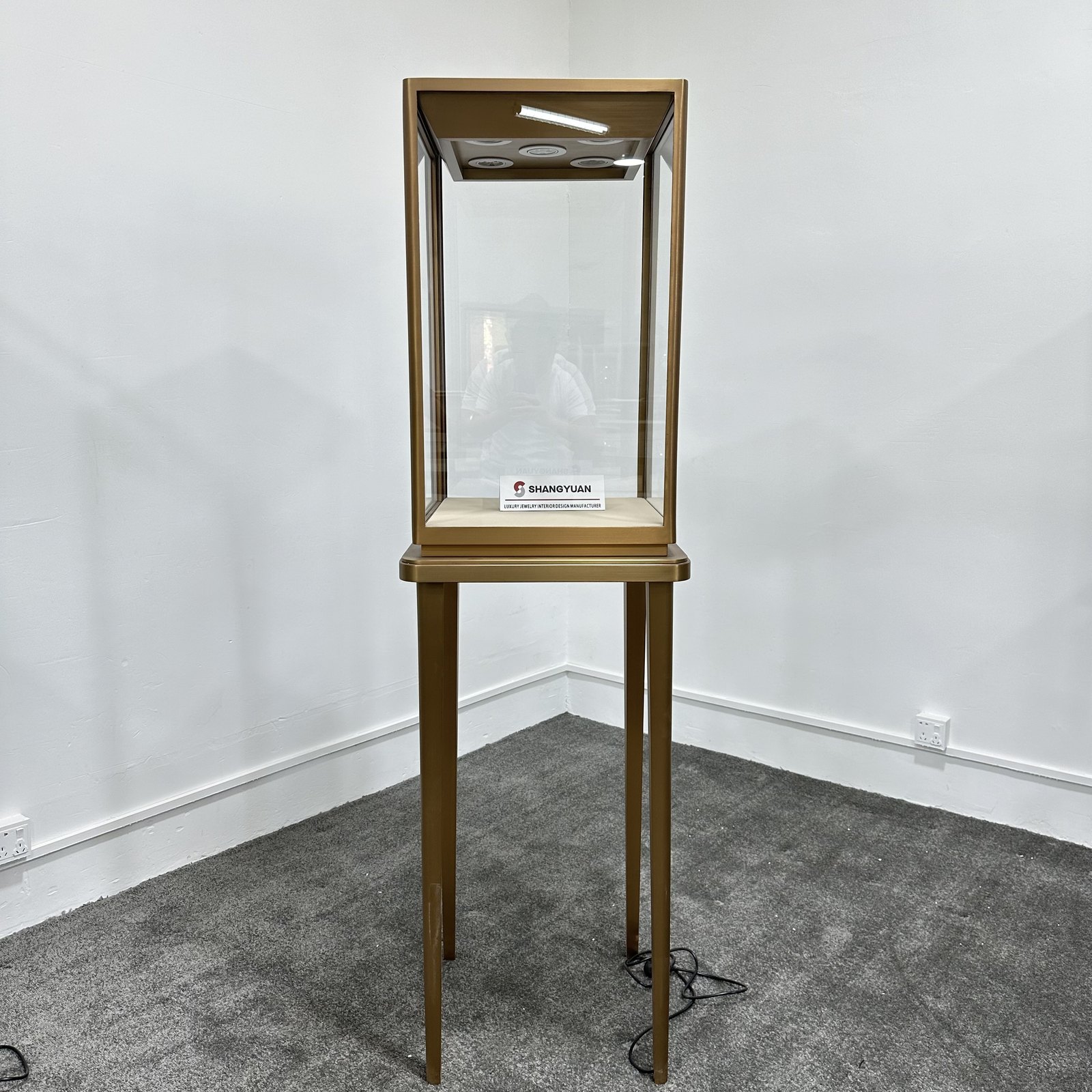
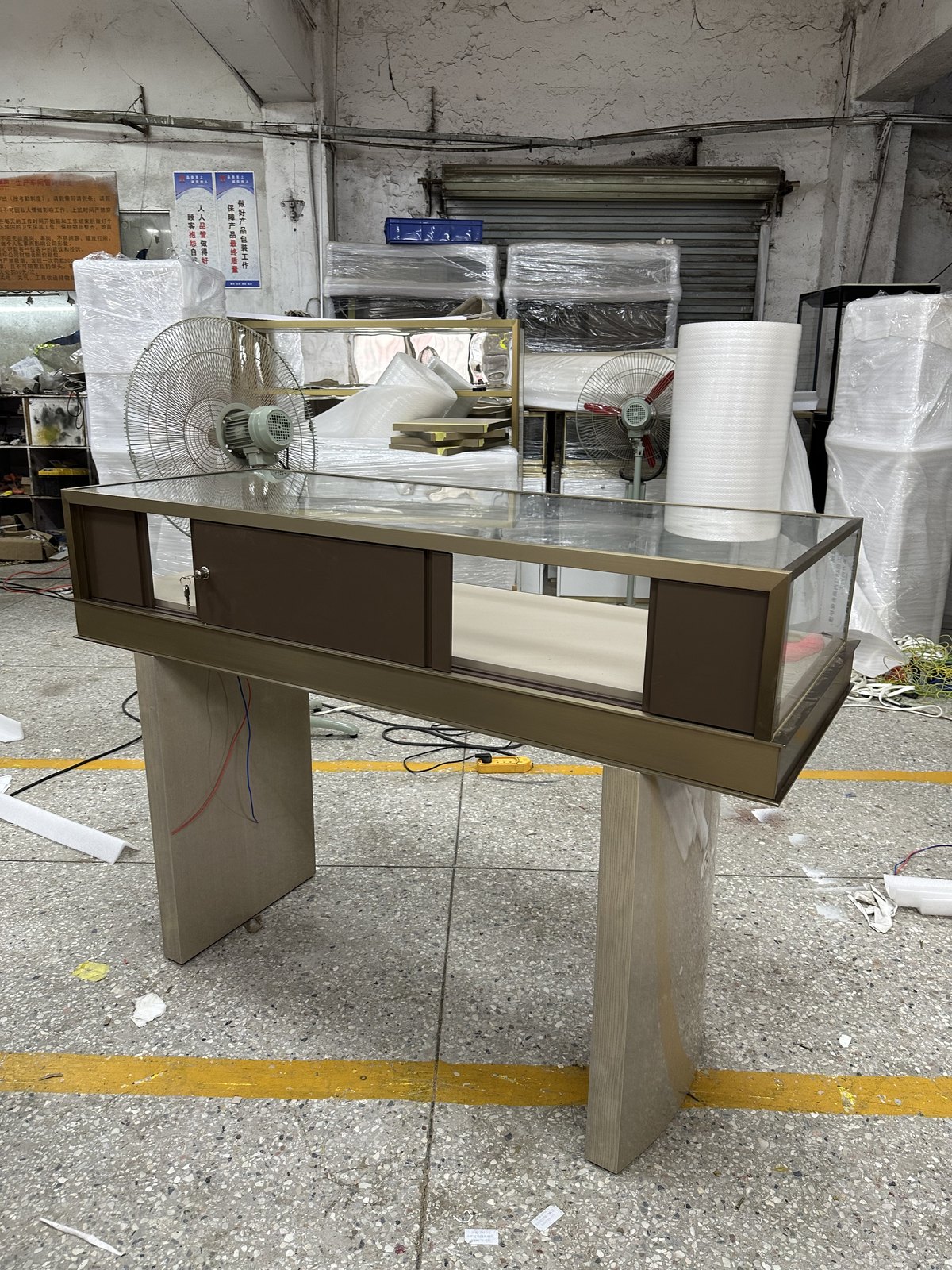
Choosing jewelry showcase metal finishes starts with the intended appearance, but the decision should also account for the substrate, color treatment, cabinet geometry and maintenance routine. Brushed surfaces emphasize a directional texture, while bright polished surfaces emphasize reflections. Compare representative samples under the proposed lighting and approve the complete finish specification, rather than choosing from the words “brushed gold” or “polished gold” alone.
1. Separate Surface Texture from Metal Color
A brushed finish has a visible directional texture. “Polished” is a broader term: it can describe different degrees of surface refinement, so it should not automatically be read as “mirror finish.” In this guide, the comparison is between a directional brushed appearance and a bright, highly reflective polished appearance.
Color is a separate specification. A gold-colored frame does not establish whether the base material is stainless steel, brass or another metal, nor does it identify the coloring process. Ask the supplier to specify the substrate, surface preparation and any coating or color treatment as one complete system.
2. Compare the Finishes under the Intended Lighting
For a restrained frame or a broad cabinet base, a directional brushed sample is worth reviewing first. For a trim detail intended to catch highlights, a bright polished sample may fit the design direction. These are design starting points, not fixed rules for luxury stores.
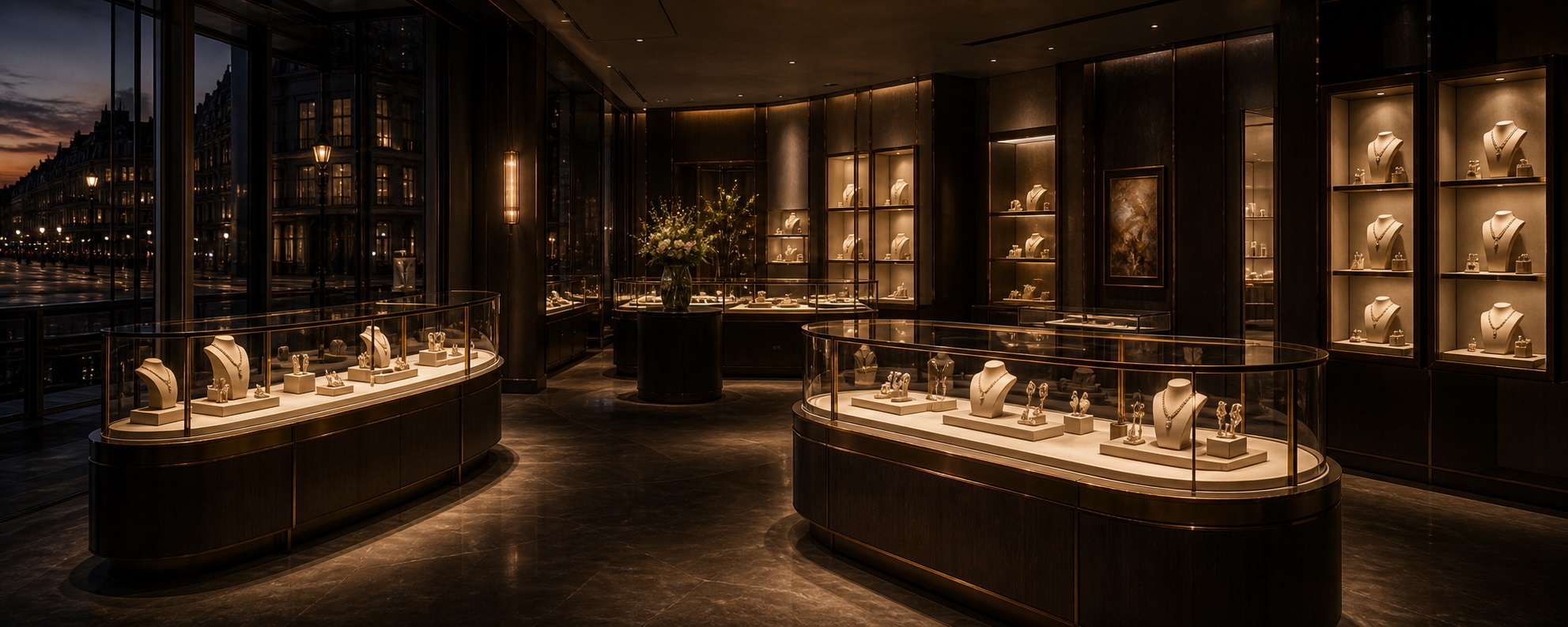
Place both samples beside the proposed glass, cabinet panels and display lining. View them from the customer’s position as well as close up. Check whether reflected lights or surrounding objects compete with the jewelry, and whether the visible grain supports the cabinet’s proportions.
| Review point | Directional brushed finish | Bright polished finish |
|---|---|---|
| Visual emphasis | Visible grain and surface texture | Bright highlights and reflected surroundings |
| Detail to approve | Grain direction and texture consistency | Reflection clarity and polishing consistency |
| Sample review | Compare adjoining pieces in the intended orientation | Inspect broad areas and corners under the same lighting |
| Care information | Confirm suitable cleaning methods for the actual finish | Confirm suitable cleaning methods for the actual finish |
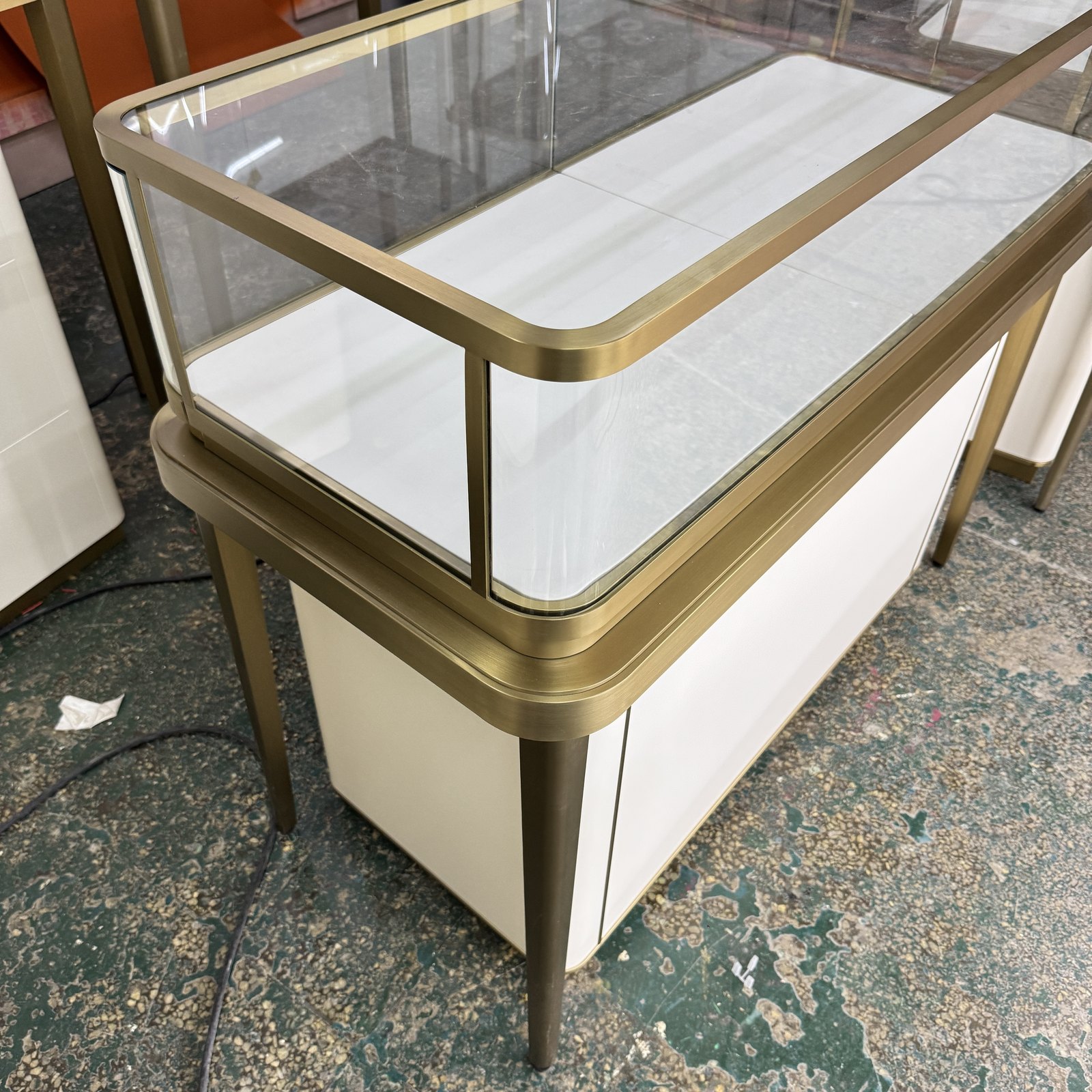
3. Grain Direction and Cabinet Geometry Need Coordination
For brushed components, mark the intended grain direction on drawings or sample references. Review how horizontal rails, vertical legs and adjoining panels meet. A finish that looks consistent on separate sample pieces may look different when those pieces are turned and assembled.
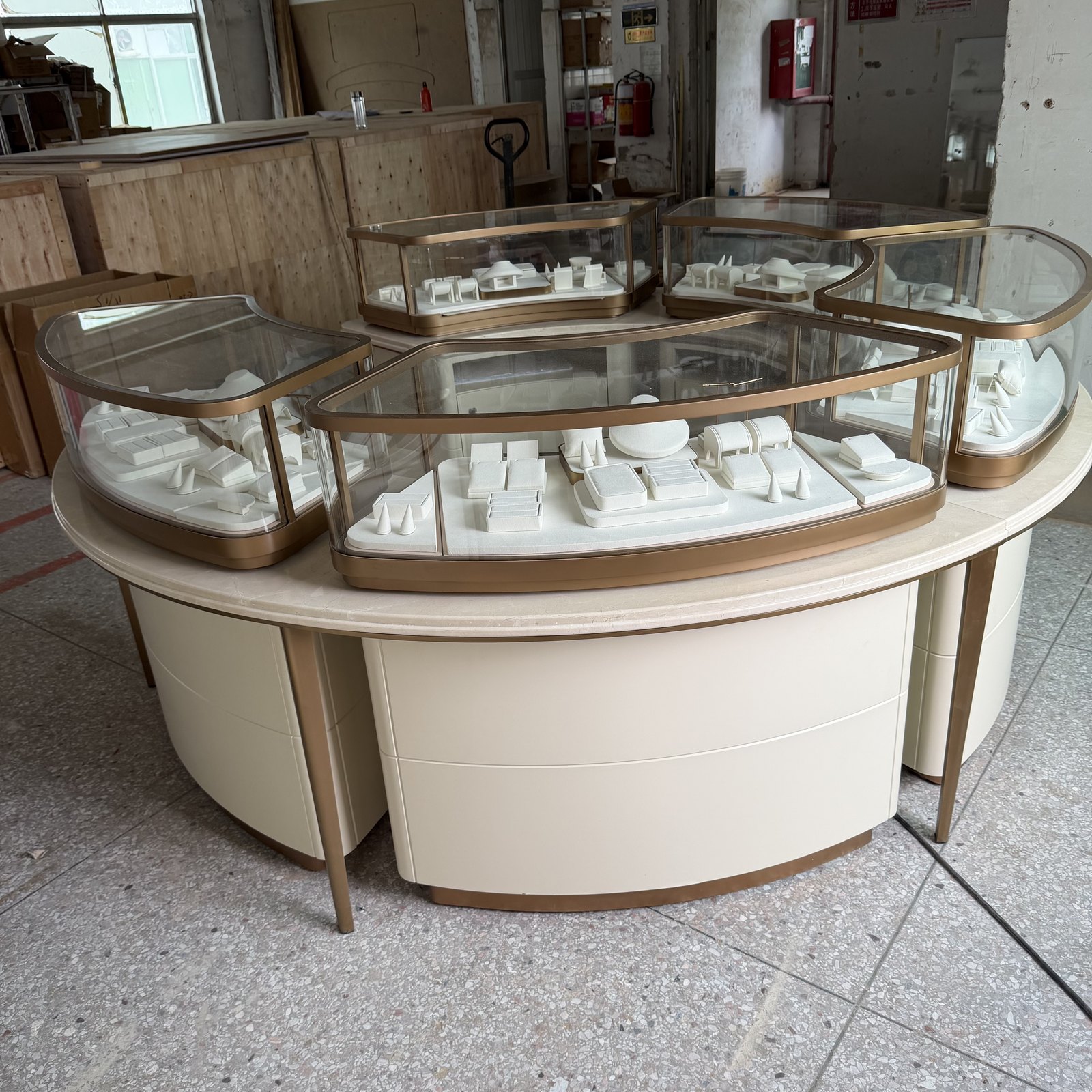
Flat sheet samples do not fully represent rounded corners, bent sections or welded junctions. Ask to see a representative fabricated detail where these features matter to the design. For a polished component, inspect how highlights travel across the corner; for a brushed component, inspect how the grain meets the adjoining surface.
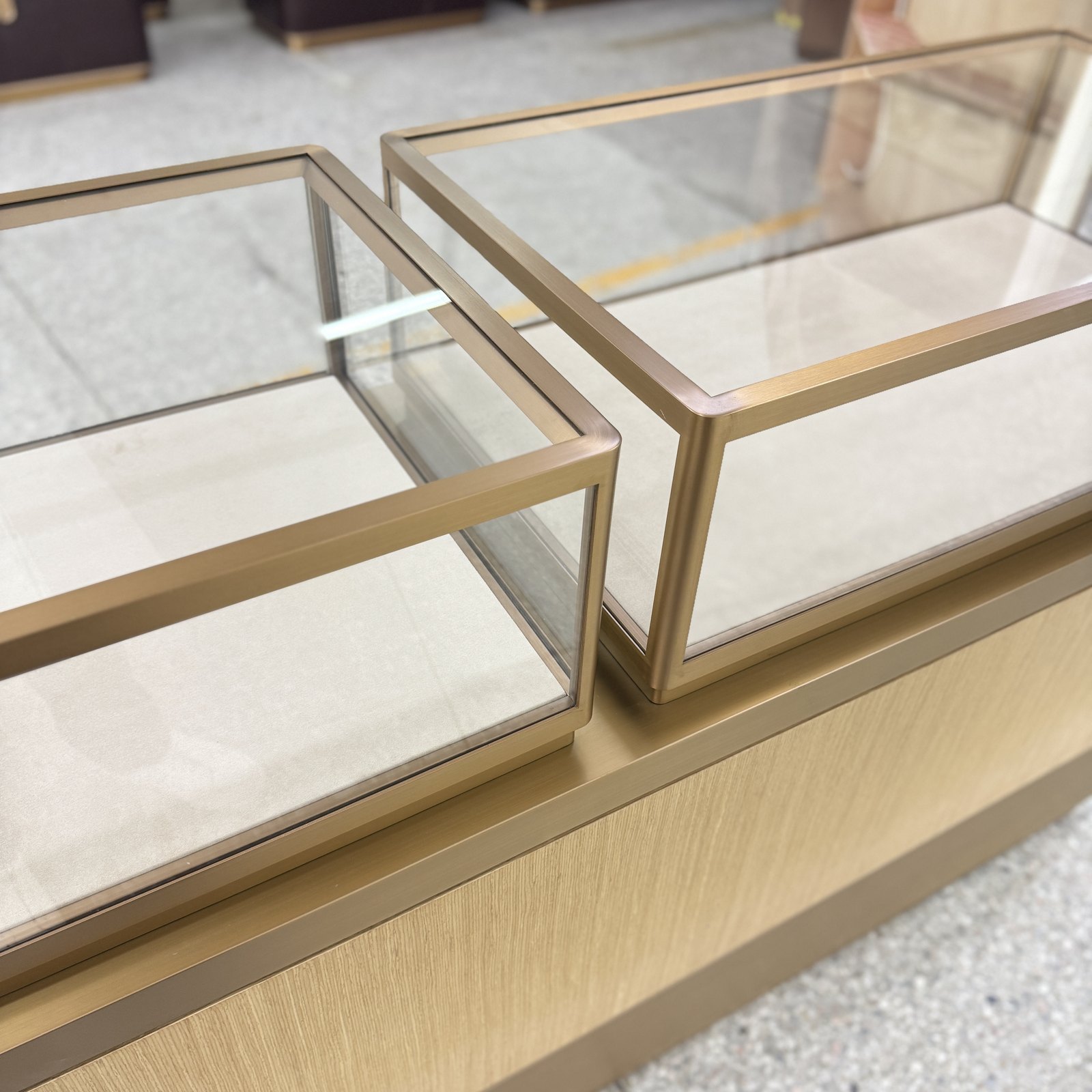
4. Approve a Finish Sample with a Written Reference
Use a physical approved sample as the appearance reference and connect it to the relevant cabinet codes. Record the base metal, selected color treatment, texture or reflectivity, and grain direction where applicable. Include any protective or anti-fingerprint coating only when it is part of the proposed specification.
Agree how adjoining components and later replacements will be compared with that sample. If a quotation changes the substrate, finish supplier or coating system, review whether a new sample is needed. A matching finish name or photograph alone does not establish an acceptable match.
5. Plan for Cleaning and Realistic Wear
Neither finish should be described as scratch-proof or maintenance-free. Finger marks, cleaning marks and wear should be assessed on the proposed surface, especially at handles, access edges and other frequently touched areas. Brushing is not, by itself, an anti-fingerprint treatment.
Request cleaning instructions for the supplied finish system. A method suitable for uncoated stainless steel may be unsuitable for a colored coating. Confirm permitted products and cloths before use, and ask the supplier how visible damage should be assessed. Local polishing or brushing can alter the surrounding appearance or affect a coating, so repair should not be assumed to be a simple on-site task.
6. Confirm the Finish as Part of the Complete Showcase
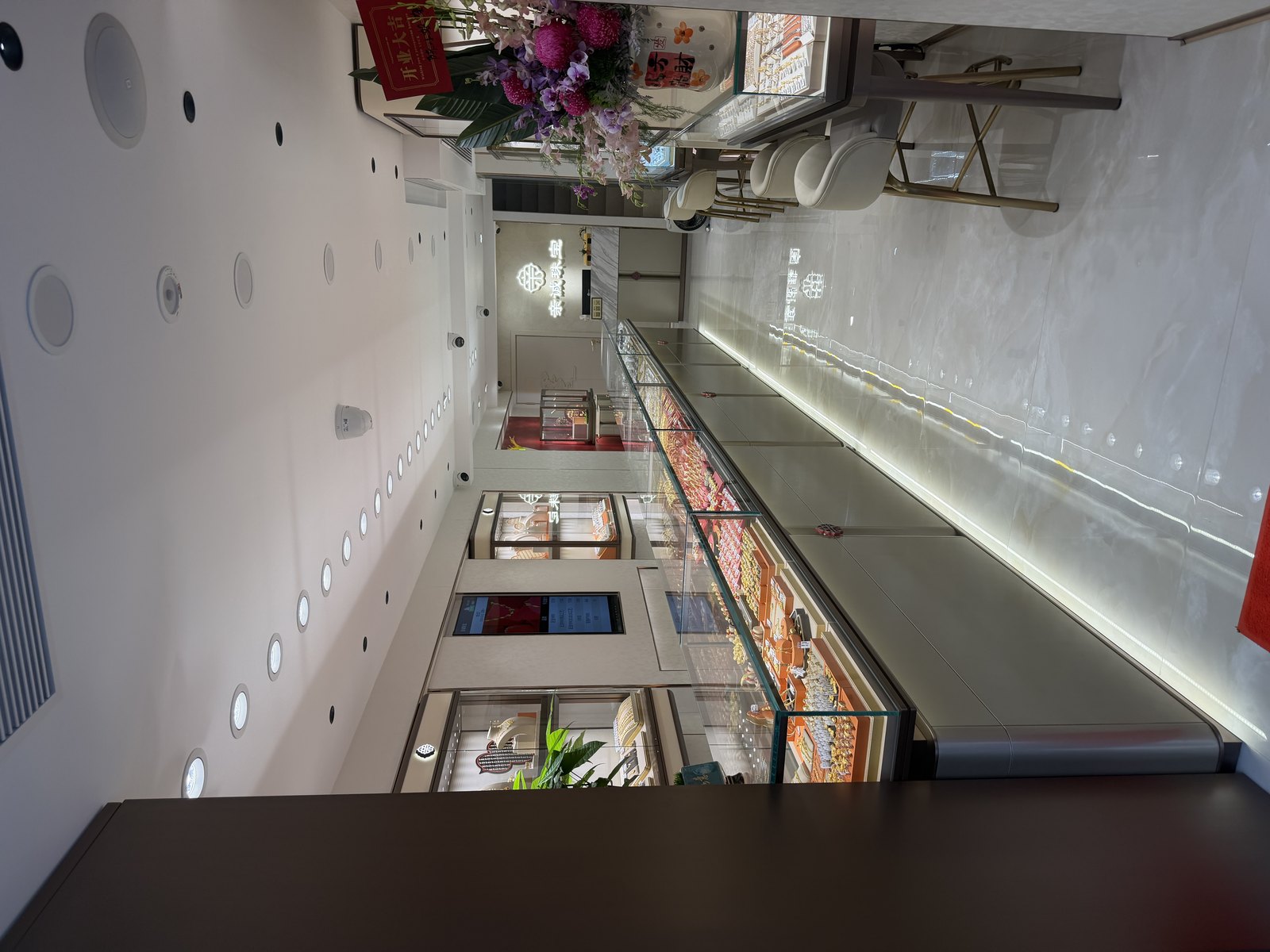
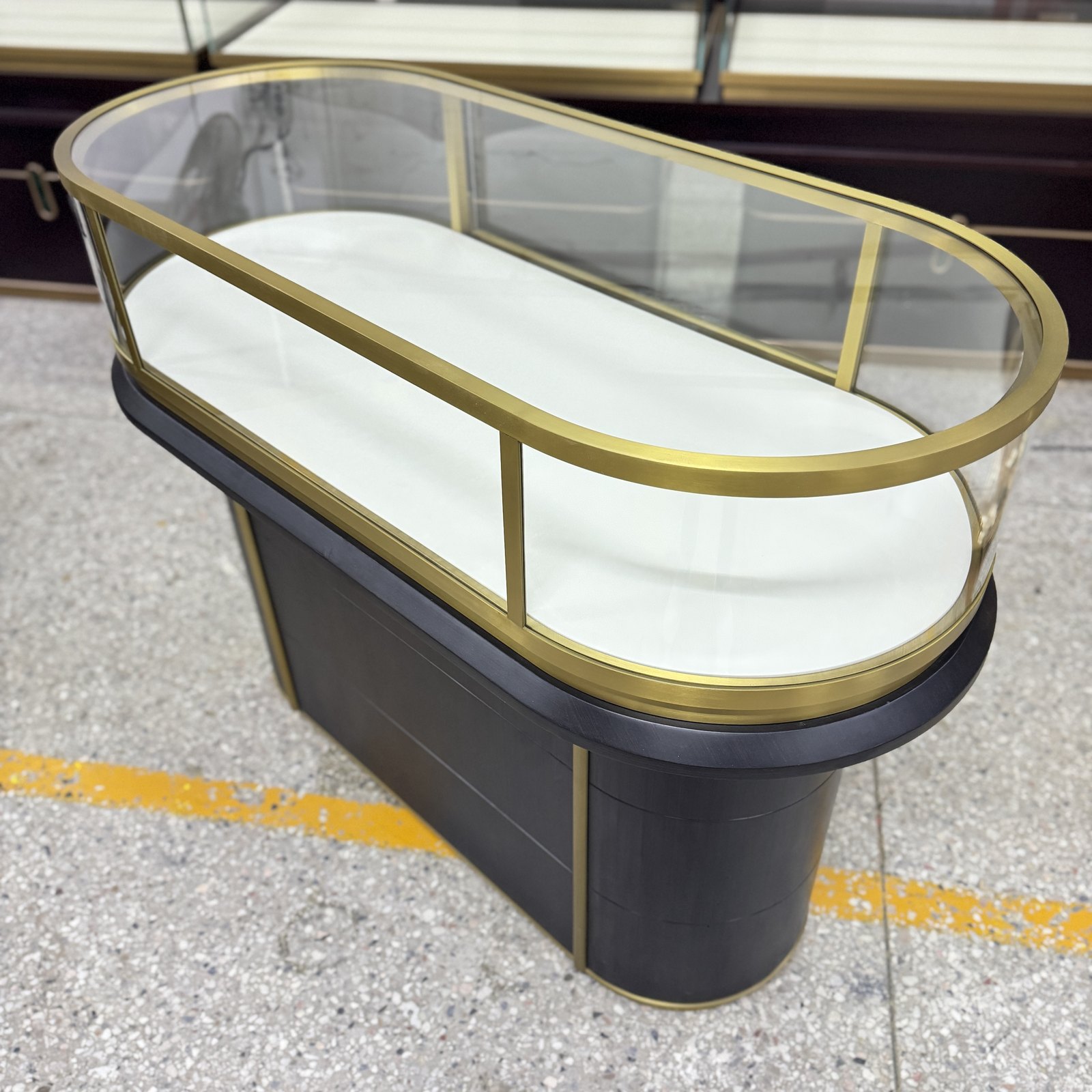
The final choice should be reviewed on the complete material combination. A small polished trim and a broad polished base may create very different effects, even when they share the same color. Likewise, a brushed frame needs its grain and joints considered as part of the assembled cabinet.
To discuss jewelry showcase metal finishes with Shangyuan Showcase, share your preferred store palette, cabinet drawings and reference samples. These provide a starting point for comparing finish options and agreeing on a specification suited to your custom showcase project.